East Texas Gas: Why Things Feel Different This Time
For a long time, East Texas gas was a tough business. But new LNG export terminals and pipeline infrastructure are creating global market opportunities that are changing everything.
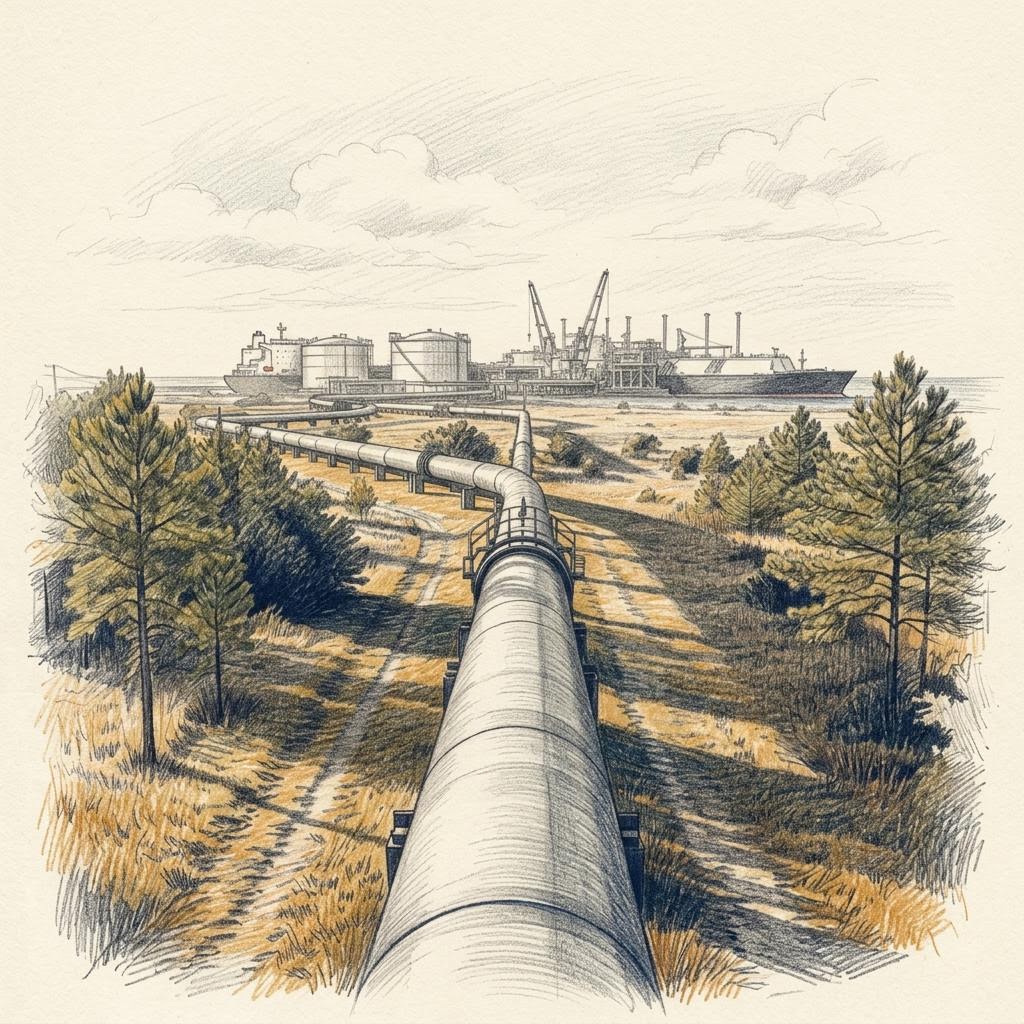
For a long time, East Texas gas was a tough business. Prices for dry gas (mostly methane) were often stuck around $2–$3 per MCF. That wasn't enough to get anyone excited about drilling.
But things are changing. Recently, prices have popped above $4, and more importantly, there are new places for our gas to go. That's the real difference today.
What's Driving the Change?
1. LNG Export Terminals
Along the Gulf Coast, huge facilities called LNG terminals freeze natural gas into a liquid so it can be shipped overseas. Once there, it's turned back into gas to heat homes or even run power plants.
- Freeport LNG (south of Houston) is already running and working on expansions.
- Golden Pass LNG (near Sabine Pass, Texas) is under construction and will be a major outlet.
- Corpus Christi LNG is adding new capacity.
- Plaquemines LNG in Louisiana is being built and will be another big pull for East Texas gas.
2. Pipeline "Lanes"
Think of pipelines like highways for gas. New "lanes" are being added so East Texas gas can actually reach those export plants.
- Gulf Run – a new pipeline built to carry Haynesville/East Texas gas south.
- Gillis Access – expansions in Louisiana to connect more gas to LNG demand.
Who Buys This Gas?
Ultimately, major customers include power companies and utilities overseas, especially in Japan, South Korea, and Europe. Their demand for reliable U.S. gas has helped drive exports.
One example: Osaka Gas USA, which owns Sabine Oil & Gas in East Texas. They can produce gas here, ship it overseas, and sell it in Japan where prices are often three to four times higher than in the U.S. Sometimes they even use that gas to run power plants and sell electricity, stacking even more value on top.
What It Means for East Texas
- More Options, More Buyers: Gas no longer has to stay local; it can move to global markets.
- More Stability: With pipelines and LNG plants, we're less stuck in the old "boom-and-bust" cycles.
- Better Outlook for Land and Mineral Owners: If you've been contacted about leasing or noticed more activity around your county, it's likely tied to these new outlets and the stronger economics behind them.
Bottom Line
East Texas gas is connected to a global market. As LNG plants and pipelines open, local production can reach customers around the world. That can bring more field activity and more calls about leases.
For landowners in Tyler, Longview, and surrounding East Texas counties, this represents a significant opportunity. If you're interested in understanding how these market changes might affect your property, contact me for a consultation.
Ryan Wilson
Landman & Advisory Consultant
Ryan brings hands-on landman experience and deep East Texas roots to projects nationwide. Through RyanWilson.Land, he shares practical, plain-English insights on mineral ownership, lease terms, title research, royalty questions, and land considerations for lithium and renewable energy projects.
Landman services, wherever the work takes you.
Ryan and the team support land and title projects nationwide. Get in touch to discuss your specific needs.