I Inherited Mineral Rights in Texas. Now What?
Your parent or grandparent passed away and left mineral rights in Texas. Here is exactly what to do next, from finding what you own to claiming your royalties, written by a working landman.
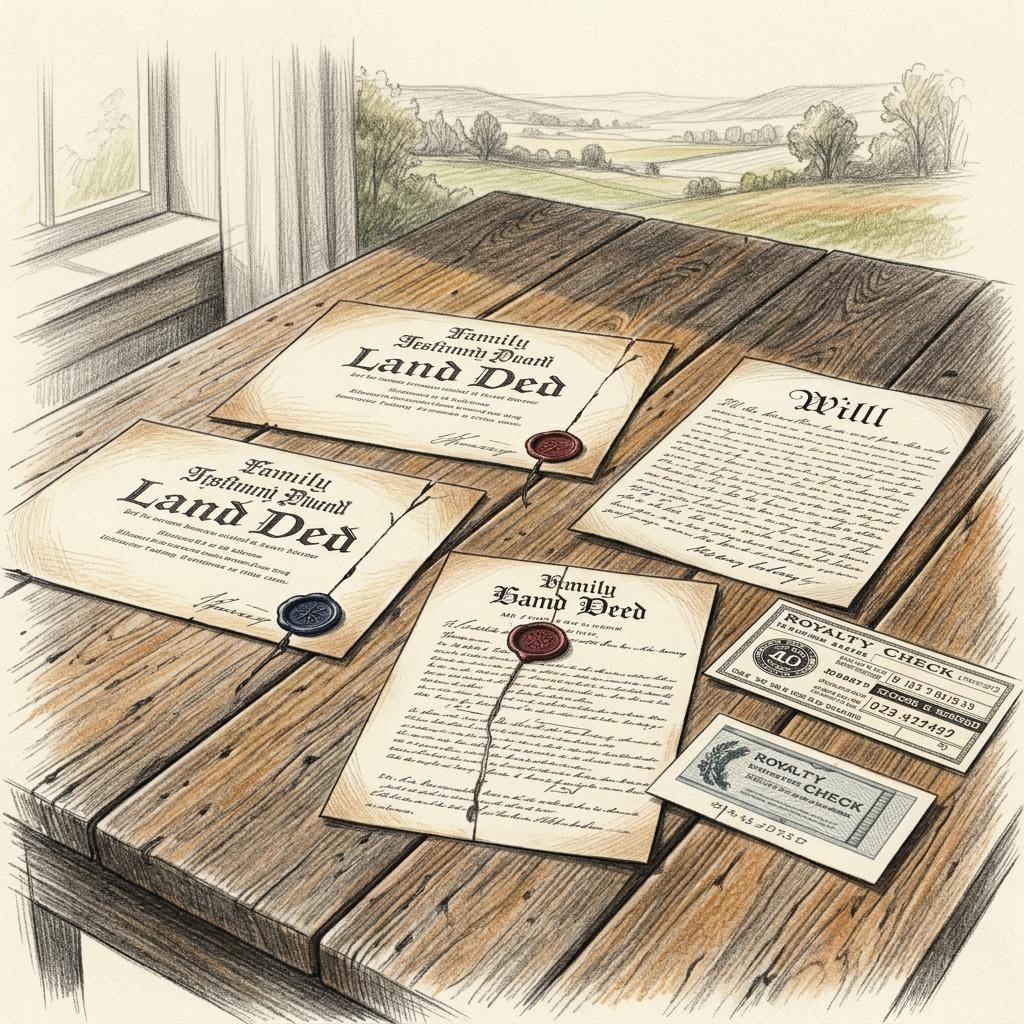
Your mom or grandfather passed away. It may have been years ago or last month. You may have found an old file, heard a cousin mention it, or received a check from a company you did not recognize. Somewhere in that process, you learned your family owns mineral rights in Texas.
Now you are staring at a concept you have never dealt with, and you do not know where to start.
I hear this story every week. It is the most common reason people contact me. And the good news is this: it is solvable. You just need to know the steps.
What Are Mineral Rights, Exactly?
In Texas, mineral rights can be separated from the surface. This means your family could own the right to oil, gas, and other minerals beneath a piece of land without owning the surface itself. This separation is called a severed mineral estate. It is incredibly common in Texas because of 150+ years of oil and gas activity.
Your ancestor might have owned the land and the minerals, then sold the surface but kept the minerals. They might have been granted the minerals by a relative through a deed. Or they inherited them the same way you are inheriting them now.
The key point: mineral rights are real property. They transfer through deeds, wills, and probate, just like a house. But unlike a house, they are invisible. There is no address to drive to. That is what makes them confusing.
Step 1: Establish the Connection
The first thing we need is your ancestor's name. The person who originally owned or acquired the mineral interest. This is the name that will appear in the county's deed records.
This might be a parent who passed recently, a grandparent who died decades ago, or a great-grandparent you never met.
If you are not sure of the name, check these sources:
- Old royalty check stubs. The payee name and the operator name are both useful.
- Probate documents. If the estate went through probate, the court file will list assets.
- Family deeds or abstracts. Sometimes filed in a drawer or safe deposit box.
- Tax records. Some Texas counties list mineral owners on the appraisal rolls.
Step 2: Identify the County
Mineral rights are recorded at the county level. Texas has 254 counties. Each one maintains its own clerk's office with its own deed records. To find your minerals, we need to search the right county.
Clues that help: a county name on old documents, an operator name on royalty checks (I can cross-reference operators to the counties where they hold leases), abstract or survey numbers ("Abstract 438" or "T Kelly Survey" tells us exactly where to look), or just family lore. "Grandpa had land near Longview" means Gregg or Harrison County. That is enough to start.
When I trace title, I search through the county's digitized records: deed books, probate filings, mineral conveyances. Some of these go back to the 1800s. In the East Texas counties I work regularly, a single county can have hundreds of thousands of recorded instruments. Every one of those records is searchable, and I cross-reference them against lease data, operator filings, and production records to build the full picture.
Step 3: Run the Chain of Title
This is where the real work happens, and it is what landmen do for a living.
A chain of title traces ownership of a specific mineral interest from the original land grant all the way down to you. Every deed, every conveyance, every probate, every heirship affidavit gets linked together.
What we are looking for:
Did your ancestor actually own minerals? Not every deed includes minerals. A common issue is a conveyance where the minerals were reserved by a prior owner. The surface changed hands but the minerals stayed with someone else.
How much do you own? Mineral interests get divided through inheritance, sales, and reservations. Your ancestor might have owned 1/2 of the minerals. If there are 4 heirs, each heir owns 1/8. The math matters.
Is there a gap in the chain? If your ancestor died without a will and no heirship affidavit was filed, the county records may not show the transfer to the next generation. This is the number one reason royalties end up in suspense. The operator cannot verify who to pay.
Step 4: Check for Active Production and Leases
Once we know what you own, I check whether anyone is currently paying royalties on your interest, holding an active lease, or drilling new wells.
If wells are producing and you are not getting checks, the money may be sitting in a suspense account with the operator. I see this all the time on inherited interests. The operator has the revenue. They just do not have a valid division order to pay against because the ownership has not been updated.
If there is new drilling activity, you may be entitled to bonus payments for a new lease or participation in a pooling unit. When operators file new permits in Harrison or Panola County, those minerals just became more valuable. The question is whether the current mineral owner knows it too.
Step 5: File What Needs to Be Filed
If there is a gap in the chain (and there almost always is with inherited minerals), you may need to file one or more documents to cure the title:
Affidavit of Heirship. A sworn document filed in the county records that describes the family tree and identifies the heirs. It commonly requires two disinterested witnesses who knew the family but do not stand to inherit.
Muniment of Title. If the deceased had a will but the estate did not go through full probate, Texas allows the will to be filed as a muniment. It proves the transfer without a full probate proceeding.
Probate. A formal probate may be necessary for contested estates, missing heirs, or interests in multiple states.
Step 6: Claim What Is Yours
Once the title is clear:
- Contact the operator with your updated ownership documents. They will update the division order and start sending checks.
- Check for unclaimed property. Texas and Oklahoma both have state-held funds from mineral royalties. If checks were issued to a deceased owner and went uncashed, the money reverts to the state comptroller's office. It is recoverable. Search at ClaimItTexas.org or OKTreasure.com.
- Evaluate your options. You can hold the minerals and collect royalties. You can negotiate a new lease if the old one expired. Or you can sell. But now you are selling from a position of knowledge, not guessing.
The Most Common Mistake
People do nothing. They hear "mineral rights" and it sounds complicated, so they put it off. Meanwhile, royalty checks sit in suspense, lease bonuses go uncollected, and unsolicited buyers send lowball offers because they know the heir has not done the work to understand what they own.
Every month you wait is money left on the table.
You Do Not Have to Figure This Out Alone
This is what I do. I research mineral ownership, trace chains of title, identify production, and help families understand what they have inherited. The process is straightforward once you have the right information.
If you are in this situation, send me what you have. A name, a county, an old check stub, even a family story. That is usually enough to get started.
Ryan Wilson
Landman & Advisory Consultant
Ryan brings hands-on landman experience and deep East Texas roots to projects nationwide. Through RyanWilson.Land, he shares practical, plain-English insights on mineral ownership, lease terms, title research, royalty questions, and land considerations for lithium and renewable energy projects.
Related Articles

How to Find Out If You Own Mineral Rights in Texas
Not sure if you own mineral rights in Texas? Here is how to find out, from county clerk searches to appraisal records, explained by a professional landman who does this every day.
Read More
Someone Wants to Buy My Mineral Rights. Should I Sell?
Got a letter offering to buy your mineral rights? Before you respond, here is what a professional landman wants you to know about unsolicited mineral offers and how to protect yourself.
Read MoreLandman services, wherever the work takes you.
Ryan and the team support land and title projects nationwide. Get in touch to discuss your specific needs.