Someone Wants to Buy My Mineral Rights. Should I Sell?
Got a letter offering to buy your mineral rights? Before you respond, here is what a professional landman wants you to know about unsolicited mineral offers and how to protect yourself.
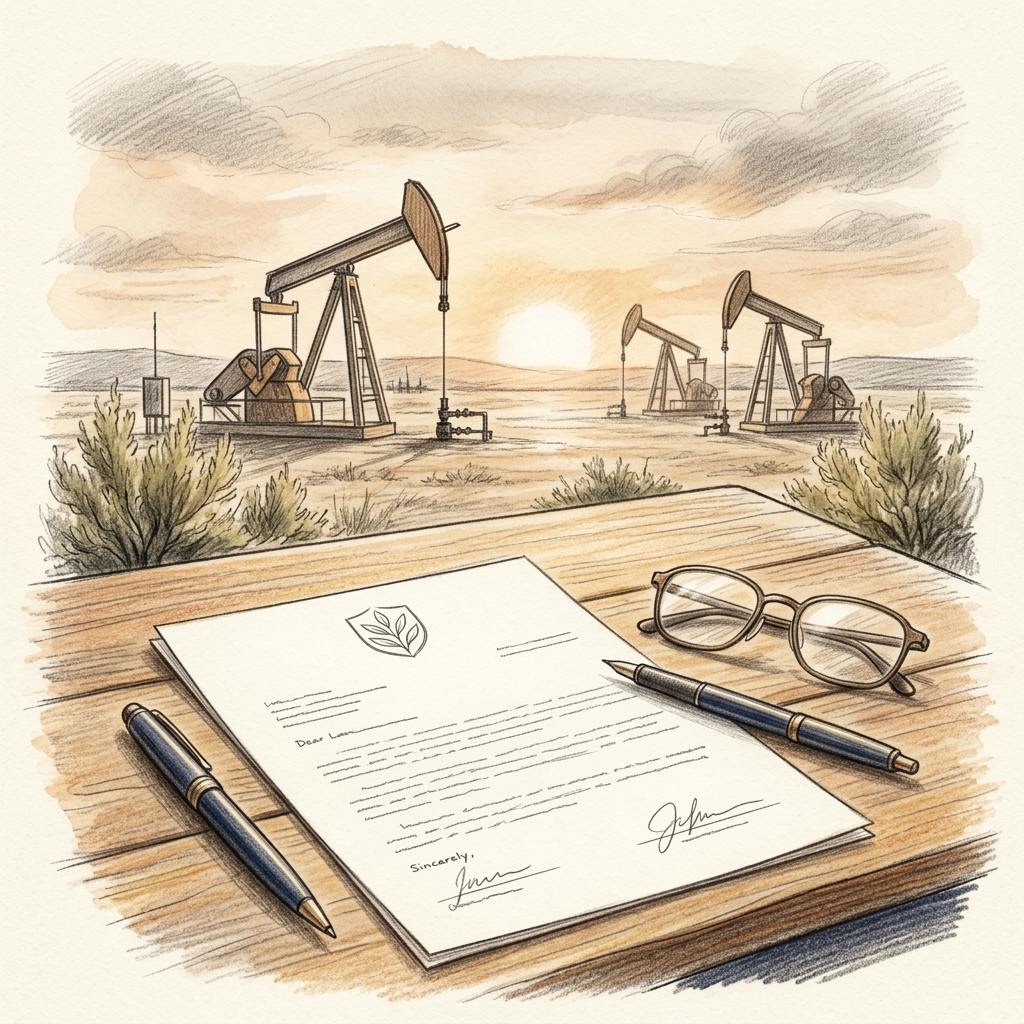
You open the mailbox and there it is. A letter from a company you have never heard of, offering to buy your mineral rights. Maybe it is the second or third one this year. The letter is polite, uses your name, references your county, and throws out a number that sounds like a lot of money.
So you start wondering: should I take it?
I get this question more than any other. It is the number one reason people find my website. And I will give you the honest answer I give every person who asks.
The Short Answer
Probably not. At least not like this.
That does not mean selling is always wrong. There are legitimate reasons to sell mineral rights. Estate simplification and diversification are real. Urgent financial need is real. But the way most of these offers work is designed to get you to say yes before you understand what you are giving up.
How These Buyers Find You
This is not random. These companies have teams pulling county records, identifying mineral owners, and mailing letters. They know what you own before you do.
Here is the typical playbook.
They pull the county clerk records. Every deed, every mineral conveyance, every probate filing is public record. When I research title for clients, I search through the same databases. The difference is I work for the owner, not the buyer.
They calculate a lowball offer. If your minerals are producing (meaning you get royalty checks), they will typically offer 3 to 4 years of annual income. The industry standard for a fair transaction is closer to 5 to 7 years, sometimes higher in active basins like the Haynesville or Permian. If your minerals are non-producing but sit in an area with active drilling permits, they may offer a flat per-acre rate that ignores the bonus potential of a future lease.
They create urgency. "This offer expires in 30 days." It does not. They will send another one next quarter.
What the Letter Does Not Tell You
Every unsolicited offer I have reviewed is missing the same things:
Your actual net mineral interest. The letter might reference your county and maybe a section number, but it almost never states the precise fraction you own. Without that, any dollar figure is meaningless. You could own 100% of the minerals under 60 acres or you could own a 1/32nd undivided interest. Those are very different assets.
Current operator activity. If an operator just permitted three new wells in your section, your minerals are about to get more valuable. The buyer knows this. You probably do not. When I see a new well permit show up in Harrison County or Panola County, I know which mineral owners are about to benefit. The buyer sending you a letter is betting you do not have that same visibility.
Lease bonus potential. If your minerals are unleased and operators are actively leasing in your area, you might be sitting on a bonus payment of $500 to $5,000+ per net mineral acre. You would collect that money and still own the minerals afterward.
The tax hit. Selling mineral rights triggers capital gains tax. Depending on your cost basis (which for inherited minerals is often the fair market value at date of death), the tax consequences can be significant.
What I Walk Clients Through
When someone calls me about an offer letter, here is the process.
Step 1: Figure out what you actually own. Before you can evaluate any number, you need to know your net mineral interest. That means pulling the chain of title. The sequence of deeds, conveyances, and probate records that traces ownership from the original grant to you.
Step 2: Check the production. If you are getting royalty checks, I pull the well data and calculate your actual annual revenue. If you are not getting checks but should be, that is a suspense mineral issue. It is recoverable.
Step 3: Understand the market. What are operators paying for leases in your area? What does the drilling activity look like? I monitor production data, permit filings, and lease activity across every major basin in Texas, Oklahoma, New Mexico, and Louisiana. That context changes the math completely.
Step 4: If you still want to sell, do it right. Do not respond to the letter. Put together a proper marketing package. Document the ownership. Document the production. And put it in front of multiple qualified buyers so they compete for your interest. When buyers compete, you get a fair price. When you respond to a cold letter, you get their price.
When Selling Does Make Sense
I am not anti-selling. Here are situations where it can be the right move:
The minerals are non-producing and in a dead basin. No activity, no permits, no geological interest. The carrying cost is zero, but so is the upside.
Estate simplification. The owner passed and there are 14 heirs across 6 states. Sometimes the cleanest solution is to sell and distribute the proceeds.
The offer is genuinely above market. This happens occasionally, usually when a specific operator needs your tract to complete a drilling unit. Those offers look very different from form letters.
But even in those cases, the process matters. Know what you own. Know what it is worth. And do not let someone else set both the price and the deadline.
If you received an offer letter, contact me with the county, the interest described, and the response deadline. A review can compare the offer with available ownership, production, and royalty records and identify questions to resolve.
Ryan Wilson
Landman & Advisory Consultant
Ryan brings hands-on landman experience and deep East Texas roots to projects nationwide. Through RyanWilson.Land, he shares practical, plain-English insights on mineral ownership, lease terms, title research, royalty questions, and land considerations for lithium and renewable energy projects.
Related Articles

How to Find Out If You Own Mineral Rights in Texas
Not sure if you own mineral rights in Texas? Here is how to find out, from county clerk searches to appraisal records, explained by a professional landman who does this every day.
Read More
I Inherited Mineral Rights in Texas. Now What?
Your parent or grandparent passed away and left mineral rights in Texas. Here is exactly what to do next, from finding what you own to claiming your royalties, written by a working landman.
Read MoreLandman services, wherever the work takes you.
Ryan and the team support land and title projects nationwide. Get in touch to discuss your specific needs.