An Old Pipeline Crosses My Property. Who Owns It Now?
Research an old pipeline through surveys, recorded easements, assignments, successor records, and operator information without treating a map as construction clearance.
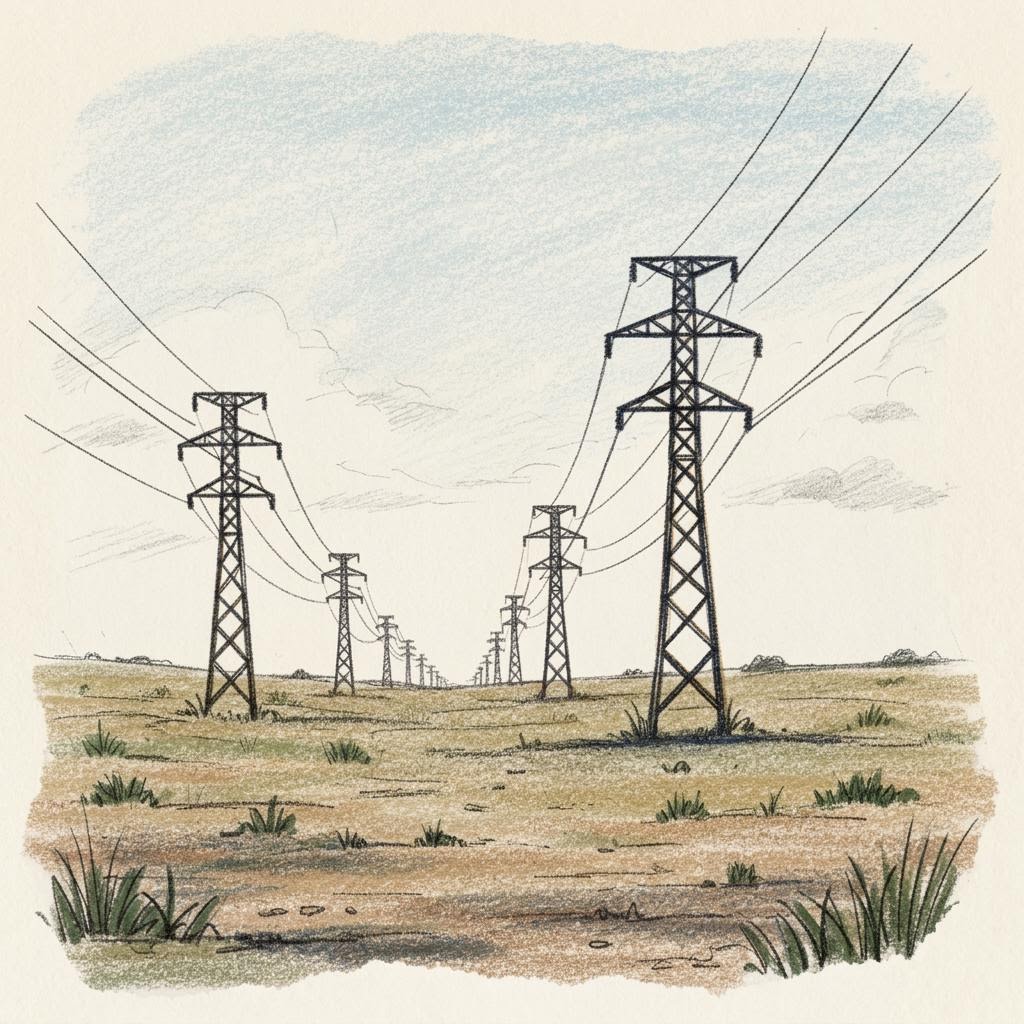
You have an old survey showing a pipeline, perhaps with the name of a company that no longer exists. A faded marker is still standing. Now you want to build a house, move an entrance, or use that part of the property.
The age of the line is not enough to answer whether the area is available. We need to establish the physical facility, the recorded rights affecting the land, and the parties holding or operating those rights today.
Those questions overlap, but each requires its own evidence.
Start with the property and survey
We begin with the complete survey, the deed, and any title material identifying easements or rights-of-way. Marker photographs and a sketch of the proposed work help us understand the concern.
A survey may label a line with the company known at the time. That is a historical lead. A marker may identify an operator or emergency contact, but it does not contain the full easement or assignment history.
We preserve the wording and distinguish separate lines. Two lines near an entrance may have different operators, different easements, or different operating status.
The exact tract matters. A right granted over a large parent property must be matched to the smaller property you now own. A shared survey name or a broad title exception does not finish that work.
Retrieve the recorded right
The original easement or right-of-way agreement tells us what was granted. Read every page, including any route exhibit and later amendments.
Our research records the grantee, described land, permitted facilities, route or width provisions, additional-line rights, and any language concerning relocation, termination, or release. We also look for assignments and later instruments that may change the position.
An agreement might define a particular corridor. Another may describe the parent tract and leave route selection to later activity. That difference matters when locating the burden, but its legal effect needs assessment against the full record.
A mortgage release should not be mistaken for a pipeline-easement release. Match the parties, the interest, and the source instrument being released.
Trace the successor
An old company may have changed its name, merged, sold a system, or transferred only part of its assets. We look for the transaction that connects the historical right to the current parties.
Recorded assignments are important. Corporate records, regulatory filings, asset schedules, and operator information may supply additional leads or links to investigate.
A large company's acquisition of another business does not prove that it acquired this particular line. A later sale may also have separated the physical facility from other assets or interests.
If bankruptcy or dissolution enters the history, locate the relevant orders and transfer documents. Do not assume the rights disappeared when the company stopped doing business. Counsel should assess the consequences of those records.
Check regulatory mapping
Pipeline mapping can help identify candidate operators, system names, permit numbers, reported status, and the relationship of mapped lines to the property.
Use it as a research source, not a construction clearance. The Railroad Commission warns that its GIS information is continually updated and that it makes no claim of accuracy or completeness. A mapped line is not a field survey or a determination of easement ownership. RRC GIS data guidance.
A reported abandoned line raises useful follow-up questions. It does not, by itself, establish that the recorded right has ended, that the pipe has been removed, or that excavation is safe.
Similarly, an in-service entry identifies a facility to investigate. The physical location and the authority under which it crosses the tract still require confirmation.
Obtain field information
If the concern affects construction, involve the appropriate operator, surveyor, and qualified engineering or locating professionals. Their work establishes facts the records alone cannot supply.
Texas811 can process survey or design locate requests as well as excavation notifications. Its guidance also explains that some private lines require separate locating. Before digging, follow the current notification and response requirements and confirm the affected operators' responses. Texas811 guidance.
An old or apparently unused line should never be opened, disturbed, or tested by the landowner. If a marker or field condition suggests a pipeline emergency, use the operator's emergency instructions and appropriate emergency services.
Ask for the action the evidence supports
Once the record and facility are identified, the owner can make a focused request. Depending on the facts, that might concern a route confirmation, construction restrictions, relocation discussions, or a release of specified rights.
The request should identify the tract and the source easement rather than referring only to "the old pipe." Include the proposed site or work area so the recipient can address the actual concern.
Counsel should evaluate termination or release questions and prepare any agreement needed to change the rights. The Railroad Commission regulates pipeline matters within its authority, but it does not resolve private pipeline-easement disputes. RRC jurisdiction guidance.
What our research provides
Our team can assemble the property and easement history, identify the supported successor leads, and prepare a burden schedule with the relevant instruments. A map can show the recorded and mapped information while stating what remains unverified.
That gives your surveyor, engineer, operator contact, and attorney a shared starting point. It also keeps a historical ownership lead from becoming an unsupported statement that the site is clear to build.
Please send the county and state, deed, complete survey, available title exceptions, marker photographs, and a sketch of the area you want to use. Scans and photographs are preferred. Do not mail originals.
Contact Ryan Wilson Land about pipeline ownership and easement research.
This article provides general records-research information. It is not an excavation clearance, engineering assessment, or legal determination that an easement has ended. Physical safety and construction suitability require the appropriate professional checks.
Ryan Wilson
Landman & Advisory Consultant
Ryan brings hands-on landman experience and deep East Texas roots to projects nationwide. Through RyanWilson.Land, he shares practical, plain-English insights on mineral ownership, lease terms, title research, royalty questions, and land considerations for lithium and renewable energy projects.
Related Articles
Solar Lease Offers: Option Periods, Payments and Landowner Questions
Evaluate a solar lease proposal by reviewing option timing, payment acreage, existing land uses, mineral rights, waivers, and restoration obligations.
Read More
Lithium From Brine in East Texas: What Landowners Should Know
A guide to East Texas lithium brine development, the land and water rights involved, and questions landowners may want to ask.
Read MoreROW Acquisition for Renewable Energy Projects: A Landman's Perspective
Key considerations and best practices for right-of-way acquisition in solar, wind, and transmission line projects.
Read MoreRelated service
Right-of-Way ResearchLandman services, wherever the work takes you.
Ryan and the team support land and title projects nationwide. Get in touch to discuss your specific needs.