Solar Lease Offers: Option Periods, Payments and Landowner Questions
Evaluate a solar lease proposal by reviewing option timing, payment acreage, existing land uses, mineral rights, waivers, and restoration obligations.
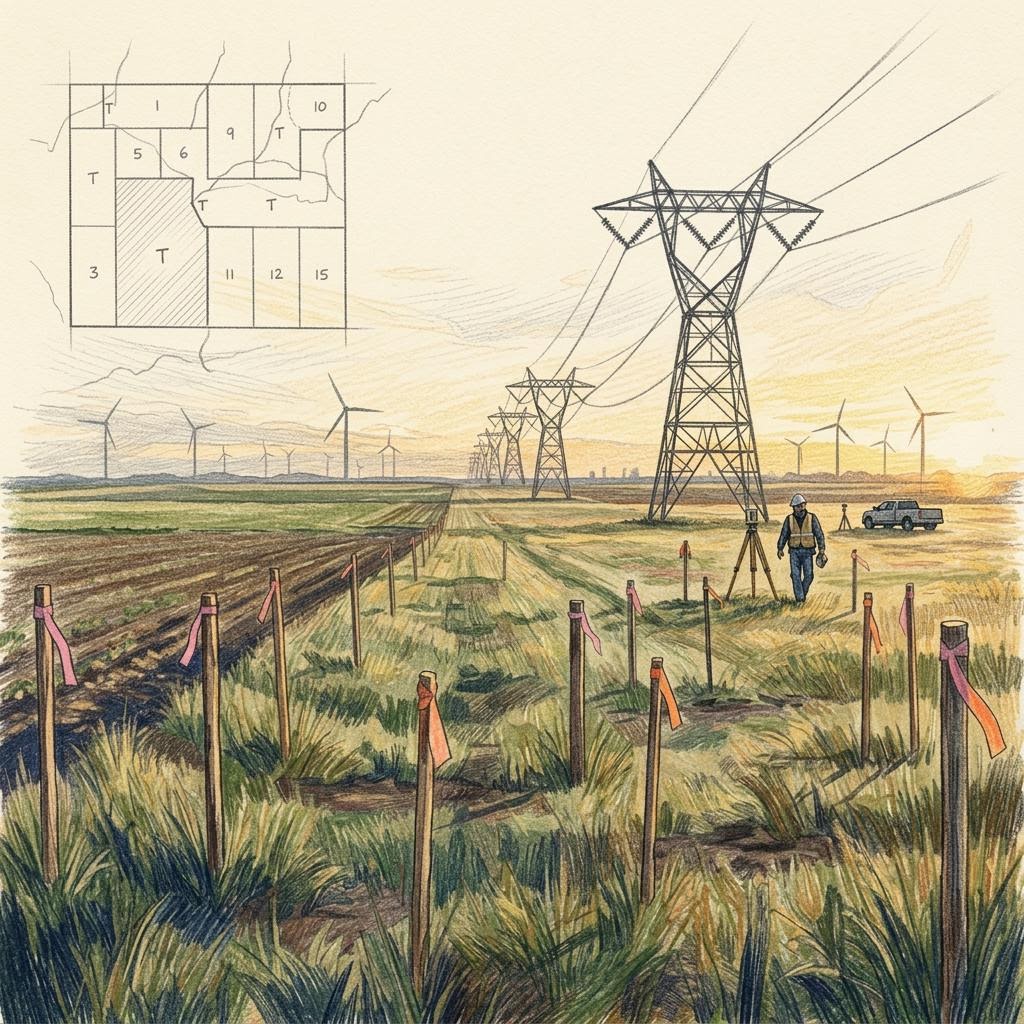
A solar developer offers annual income for your land. The proposal may look attractive, particularly if farming or grazing returns have been uneven.
Before comparing the payment with your current income, establish when that payment begins, which acreage earns it, and how the agreement affects the rest of the property. The headline operating rent may be several steps away from the document you are being asked to sign today.
We approach a solar proposal as a property and agreement review. The surface ownership, existing burdens, and mineral rights belong in that review early.
The option period
An option can give the developer time to investigate the property and decide whether to proceed. Ask what it pays during that period, how long it lasts, and whether it can be extended.
Read what you are committing to at the outset. Is the future lease already attached and binding if the option is exercised, or is another agreement still to be negotiated? What access, testing, exclusivity, and recording rights begin immediately?
For a hypothetical example, a proposal may advertise a substantial annual operating payment while offering a much smaller amount during several years of investigation. The operating amount should not be used as though it starts when the option is signed.
We put each phase on a schedule. That makes the timing and conditions visible before the owner compares the offer with other uses of the land.
The payment acreage
Ask which acres receive rent. The agreement may distinguish the leased property, occupied area, fenced footprint, access acreage, or a minimum payment area.
Then compare the legal description with the proposed layout. Roads, transmission lines, substations, drainage, or storage facilities may affect land beyond the panel area. Determine whether those rights have separate compensation or are included in the stated payment.
Check escalation provisions, payment dates, and the consequences of construction delays. A payment table should show what the owner would receive under the actual wording, with uncertain inputs identified.
We do not assume a quoted per-acre amount applies to every acre in the deed.
Existing uses and future plans
Identify what the owner wants to preserve. That may include access to a home, cattle movement, hunting, irrigation, drainage, or a planned family division.
Walk those uses onto a map. Ask how fencing, gates, roads, and construction would affect them and what uses remain permitted afterward. A promise made during a property visit should be compared with the written agreement.
Solar development can affect agricultural or open-space tax treatment. Discuss the specific property with the appraisal district and your tax adviser, and have counsel review who bears project-related tax changes. The State Bar of Texas landowner article on solar leases identifies land-use and tax questions worth addressing.
Surface ownership and mineral rights
Owning the surface does not answer every question about rights affecting the site. We examine the surface chain, severed mineral interests, recorded leases, and other burdens relevant to the project.
For a Texas site, mineral-development rights can create concerns for a long-term surface facility. The parties need to establish the actual rights and restrictions rather than assuming the proposed solar layout settles them. RRC surface-ownership guidance.
That can lead to mineral-waiver or non-disturbance work. The appropriate form and parties depend on the ownership, existing agreements, and project requirements. A mineral owner and a company holding a lease may have different interests requiring separate attention.
Mineral-waiver campaigns
From the developer's side, a useful campaign begins with a researched ownership schedule. It identifies the affected tracts and parties, the supporting instruments, and the gaps requiring further work.
The campaign then tracks contacts, proposed agreements, responses, execution, and recording where appropriate. Counsel prepares or approves the legal forms. Our landmen can research the parties and support the acquisition effort under the agreed scope.
From the owner's side, review what rights the requested waiver changes and how it could affect future development or income. It deserves its own explanation and review.
One person's signature does not establish that every interest affecting a site has been addressed. The ownership schedule and agreement coverage need to be compared.
Restoration and financial assurance
Ask what must be removed, what condition the property must be returned to, and what secures the company's performance. Also examine what happens when the project or lease is assigned.
Texas Utilities Code Chapter 302 imposes facility-removal and financial-assurance requirements on agreements within its scope. It was amended in 2025, including provisions concerning recycling and disposal. Counsel should check applicability and the current requirements against the proposed agreement. Texas solar power facility agreement statute.
Do not assume that a general restoration sentence addresses every project concern. Identify the expected facilities, the financial security, and the owner's obligations for making any required requests.
The next step
Please send the option and proposed lease, all exhibits, any site map, the county and state, and your deed or available title material. Include the developer's deadline and the uses of the property you want to protect. Electronic copies are preferred. Keep your originals.
Our team works on both owner-side reviews and developer-side title and waiver assignments, with the client role and scope established for each matter. We can organize the land records, review the proposed business arrangement, and identify issues for your attorney. Engineering, permitting, and tax advice are separate specialist work.
Contact Ryan Wilson Land about a solar lease or title assignment.
This article provides general information for evaluating a solar proposal. It is not legal or tax advice and does not determine the rights affecting a particular site.
Ryan Wilson
Landman & Advisory Consultant
Ryan brings hands-on landman experience and deep East Texas roots to projects nationwide. Through RyanWilson.Land, he shares practical, plain-English insights on mineral ownership, lease terms, title research, royalty questions, and land considerations for lithium and renewable energy projects.
Related Articles
An Old Pipeline Crosses My Property. Who Owns It Now?
Research an old pipeline through surveys, recorded easements, assignments, successor records, and operator information without treating a map as construction clearance.
Read More
Lithium From Brine in East Texas: What Landowners Should Know
A guide to East Texas lithium brine development, the land and water rights involved, and questions landowners may want to ask.
Read MoreROW Acquisition for Renewable Energy Projects: A Landman's Perspective
Key considerations and best practices for right-of-way acquisition in solar, wind, and transmission line projects.
Read MoreRelated service
Renewable Energy Land ServicesLandman services, wherever the work takes you.
Ryan and the team support land and title projects nationwide. Get in touch to discuss your specific needs.