Battery Storage Site Selection: Land, Title and Lease Questions Before Site Control
A battery storage site needs more than acreage near a substation. Review ownership, access, utility corridors, mineral conflicts and lease terms alongside specialist studies.
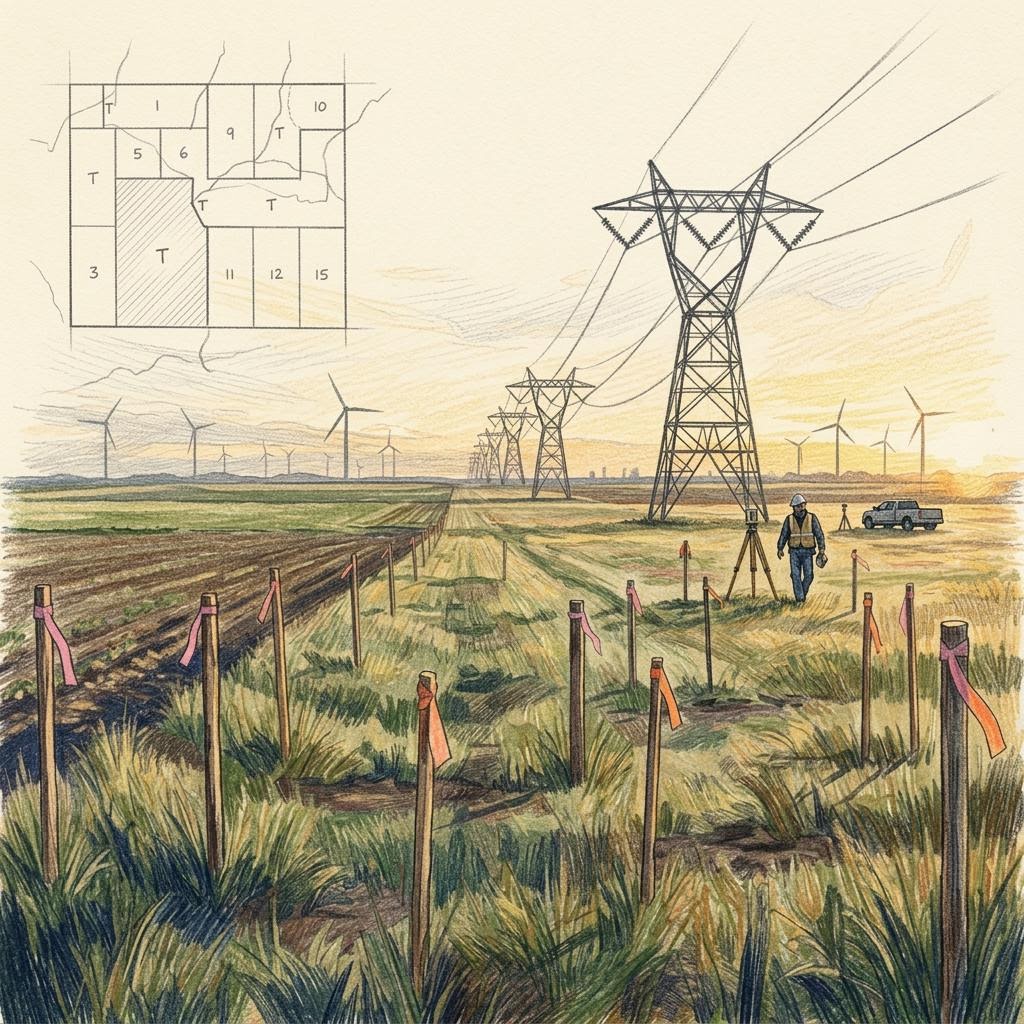
A battery energy storage system, often called BESS, can occupy a standalone site or share land with a generation project. Either way, finding an apparently suitable parcel is only the beginning. The next questions are who can grant the rights, what is already recorded against the property, and how the proposed footprint connects to access and utility corridors.
Energy Infrastructure Land Services focuses on that land-side work: record-backed site screening, ownership research, leasing support and right-of-way coordination. It does not establish electrical capacity, engineering suitability or permit approval.
Start with the footprint, not just the acreage
Ask the developer for a preliminary site plan showing equipment areas, access, utility connections and possible expansion. A lease description covering the battery equipment alone may leave important access or cable rights outside the agreement.
Land-side screening should connect that proposed footprint to legal descriptions and recorded boundaries. A surveyor should resolve boundary and survey questions. Electrical and civil specialists should determine the technical requirements, setbacks, drainage and construction needs.
A useful early question is: which parts of the project need rights on other properties? A short connection corridor can still cross multiple owners, roads or existing easements.
Establish who can grant each right
Surface ownership and mineral ownership may be held separately. Existing leases, easements, liens, restrictions or other recorded instruments can affect the rights available for a proposed storage site.
The research file should identify:
- The proposed tracts and their legal descriptions.
- The recorded owners and the documents supporting the ownership schedule.
- Existing access, pipeline, utility and other easements.
- Recorded leases, restrictions and potential competing uses.
- Missing records, uncertain interests or issues needing counsel's review.
Do not assume one signature settles every right the project needs. Whether a waiver, consent, release or other agreement is required depends on the title, existing instruments and applicable law. State-qualified counsel should make those legal determinations.
Nearby electrical infrastructure is not confirmed interconnection
A parcel beside a substation or transmission line may be worth investigating. That location alone does not establish available capacity, a usable point of connection, upgrade costs or a completion date.
ERCOT's resource integration guidance describes the process for new and modified generation interconnections within its system. The project's electrical specialists and relevant utility or transmission provider must evaluate the applicable requirements. Other markets have their own processes.
Coordinate site-control timing with that work. A signed land option is not evidence that interconnection has been approved.
For landowners: compare the option and the operating lease
An option can hold a site while the developer investigates it. The operating lease can involve a different payment structure, term and set of obligations. Before signing, organize the proposed documents and ask:
- What property is tied up during the option, and for how long?
- What payments apply during the option, construction and operation?
- Which events trigger extensions or the start of rent?
- Are access, utility corridors and expansion areas clearly described?
- How are existing agricultural uses, mineral operations and other agreements addressed?
- Who handles taxes, insurance, assignments and lender-related requests?
- What removal, restoration and financial-security obligations are proposed?
These are commercial and record-review questions, not a recommended lease form. Your attorney should evaluate enforceability, liability and protection of retained rights. Fire-safety, environmental and technical suitability belong with qualified specialists and the relevant authorities.
Solar-plus-storage and lithium are different land questions
Adding batteries to a solar project may require separate site control or changes to existing agreements. Review whether the existing instruments actually cover the new equipment, access and utility footprint rather than assuming a solar lease automatically does.
Lithium brine development is part of the battery supply chain, not the same activity as operating a battery storage site. Solar, geothermal and lithium land services can complement the land work, but the rights and agreements need project-specific review.
What to bring to an initial conversation
Developers can start with candidate parcel locations, a proposed footprint, available title or survey records, corridor needs and the status of specialist studies. Landowners can bring the offer, option, lease, exhibits, deeds and existing agreements.
A practical initial deliverable is a tract and ownership schedule, a list of recorded-rights issues and missing documents, and questions to coordinate with counsel and the technical team. It is not a guarantee that a parcel can be developed.
Discuss battery storage land support or request a landowner lease-terms review. Include the project type and county in your message.
Sources and scope
- DOE electric-grid project overview: distinguishes storage, transmission, distribution and other grid-related technologies.
- ERCOT resource integration: official resource-interconnection guidance.
Sources reviewed October 3, 2026. This article is general land-side guidance, not legal, engineering, valuation or permitting advice. Requirements and commercial terms vary by project and jurisdiction.
Ryan Wilson
Landman & Advisory Consultant
Ryan brings hands-on landman experience and deep East Texas roots to projects nationwide. Through RyanWilson.Land, he shares practical, plain-English insights on mineral ownership, lease terms, title research, royalty questions, and land considerations for lithium and renewable energy projects.
Related Articles
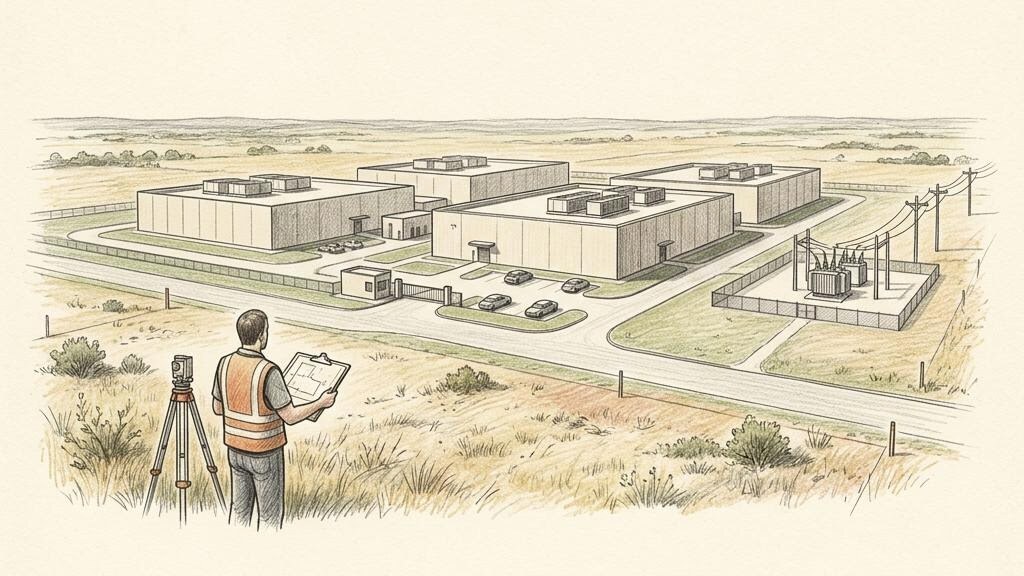
Data Centers and Powered Land: What Land-Side Site Screening Can and Cannot Confirm
Separate ownership, site control, access and utility-corridor research from the specialist work needed to confirm power availability for data centers and industrial campuses.
Read MoreSolar Lease Offers: Option Periods, Payments and Landowner Questions
Evaluate a solar lease proposal by reviewing option timing, payment acreage, existing land uses, mineral rights, waivers, and restoration obligations.
Read More
An Old Pipeline Crosses My Property. Who Owns It Now?
Research an old pipeline through surveys, recorded easements, assignments, successor records, and operator information without treating a map as construction clearance.
Read MoreLandman services, wherever the work takes you.
Ryan and the team support land and title projects nationwide. Get in touch to discuss your specific needs.