Data Centers and Powered Land: What Land-Side Site Screening Can and Cannot Confirm
Separate ownership, site control, access and utility-corridor research from the specialist work needed to confirm power availability for data centers and industrial campuses.
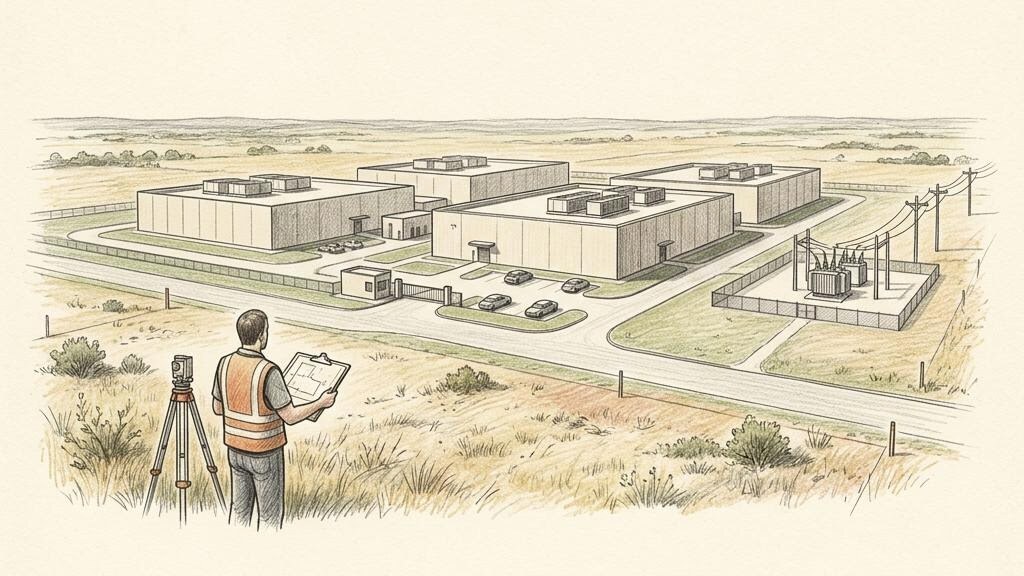
A large parcel near a transmission line can look attractive for a data center or industrial energy campus. But acreage and proximity do not make the property ready for a large electrical load. Land rights and power availability are separate questions, and both need evidence.
The term "powered land" should prompt a request for supporting documentation, not an assumption that the site has confirmed service. Energy Infrastructure Land Services helps organize ownership, site control, access and recorded-rights research while electrical specialists evaluate the power requirements.
Build a land file and a power file
The land file connects the proposed development to the property and the rights needed to use it. Start with tract descriptions, recorded ownership, existing agreements, access and the areas needed for phased expansion.
The power file should be developed with the appropriate utility, transmission provider and electrical advisers. Ask what service or interconnection work has been completed, what documentation supports the claimed capacity, what remains conditional, and who is responsible for the next steps.
Do not substitute a land seller's statement, a map of nearby lines or a general discussion with a utility for project-specific confirmation.
ERCOT's large-load integration resources describe its large-load processes, separately from its resource integration guidance for generation. A campus combining load, generation and storage needs coordinated specialist review; the land team should not promise a regulatory classification or approval path.
Look beyond the main campus parcel
The facilities supporting a campus can require rights beyond the building footprint:
- Road access and construction access.
- Electrical corridors, substations or switchyard sites.
- Fiber and communications routes.
- Water, fuel and other utility corridors where the design requires them.
- Backup or on-site generation and battery equipment areas.
- Expansion parcels and temporary construction areas.
Each route can involve different owners and existing uses. A recorded easement should be reviewed for its actual scope, not merely its presence in an index. Counsel should assess whether an existing right covers the proposed use and what additional agreements are needed.
Water arrangements, environmental conditions and infrastructure suitability require qualified review. A title search cannot confirm water supply, treatment capacity, drainage performance or environmental compliance.
Research existing uses before assembling the site
A prospective campus may overlap agricultural activity, mineral leases, pipelines, utility rights, recorded restrictions or surviving industrial-site agreements. The important question is not just whether those records exist, but which issues must be resolved before the project advances.
A land-side issue list can distinguish documented rights, missing information and matters requiring interpretation. Surveyors resolve boundary questions; counsel evaluates legal effects; technical teams evaluate physical and operational conflicts.
Retired industrial and power-plant sites deserve the same discipline. Prior industrial use does not establish that old agreements, access rights or environmental obligations fit a new project.
Plan phased expansion deliberately
A first-phase lease or purchase may not include every parcel, access route or corridor needed later. Compare the proposed phases with the agreement exhibits and ownership schedule.
Discuss option periods, milestones, assignment requests, expansion rights and what happens if the expected power schedule changes. Those commercial questions affect developers and landowners differently. An engagement should identify whose interests the land team represents and disclose potential conflicts rather than implying simultaneous advocacy for opposing parties.
For an owner receiving an offer, lease-terms review can help organize commercial questions and the rights covered by the proposal. Legal advice and transaction documents remain counsel's responsibility.
On-site energy does not remove the land questions
Microgrids can combine local generation, storage and nearby loads. DOE's grid overview distinguishes microgrids from storage and virtual power plants. A microgrid still needs project-specific land, equipment-site and internal corridor rights.
Charging depots, dispatchable generation and geothermal facilities bring their own access, fuel, water or subsurface questions. Treat them as related project types, not identical leases. A virtual power plant aggregates distributed resources; the relevant land work may concern the underlying equipment locations rather than one large new site.
What a useful screening package contains
A record-backed first review can organize:
- Candidate tracts and a recorded ownership schedule.
- Existing rights and restrictions affecting the proposed footprint.
- Access and utility-corridor needs, including off-site parcels.
- Missing documents and issues for surveyors or counsel.
- Questions that must be answered by the power and technical teams.
That package helps the team decide what to investigate next. It is not a certification of power availability or development feasibility.
Discuss a data center or industrial-power land project. Include the county, proposed use, phase plan and available records. Landowners can ask about a proposed lease or development offer.
Sources and scope
Sources reviewed October 3, 2026. This article addresses land records and commercial research, not legal conclusions, grid-capacity assurances, engineering design, environmental certification or permit approval.
Ryan Wilson
Landman & Advisory Consultant
Ryan brings hands-on landman experience and deep East Texas roots to projects nationwide. Through RyanWilson.Land, he shares practical, plain-English insights on mineral ownership, lease terms, title research, royalty questions, and land considerations for lithium and renewable energy projects.
Related Articles
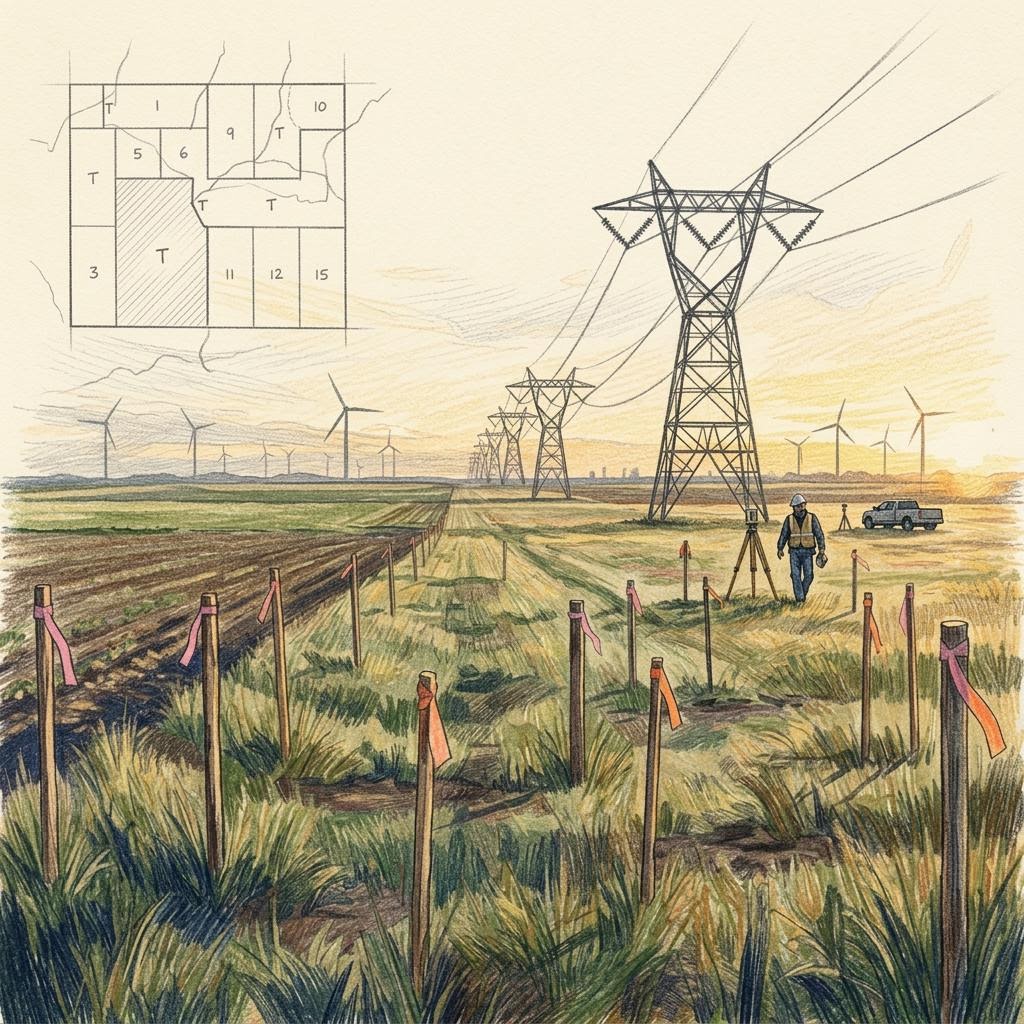
Battery Storage Site Selection: Land, Title and Lease Questions Before Site Control
A battery storage site needs more than acreage near a substation. Review ownership, access, utility corridors, mineral conflicts and lease terms alongside specialist studies.
Read MoreSolar Lease Offers: Option Periods, Payments and Landowner Questions
Evaluate a solar lease proposal by reviewing option timing, payment acreage, existing land uses, mineral rights, waivers, and restoration obligations.
Read More
An Old Pipeline Crosses My Property. Who Owns It Now?
Research an old pipeline through surveys, recorded easements, assignments, successor records, and operator information without treating a map as construction clearance.
Read MoreLandman services, wherever the work takes you.
Ryan and the team support land and title projects nationwide. Get in touch to discuss your specific needs.